Posted on 09/04/2013 by cbenson
in
visit us on facebook
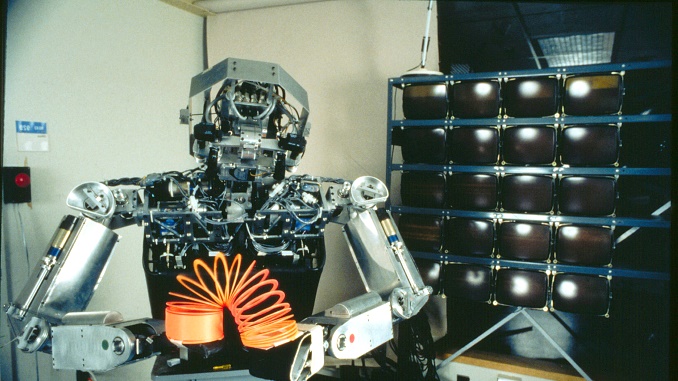
A robot is a machine, usually equipped with arms,
wheels or legs, that operates automatically. The majority of robots are
to be found in industries such as car manufacturing, where they are used
to do tasks that would otherwise be dangerous, difficult or tedious for
people. Recently personal robots for the home have become a reality,
with the introduction of the Roomba vacuum cleaner and the RoboMower
grass cutter. These robots are relatively simple and are a long way from
the robot helpers we see in films such as Star Wars and Wall.e. The
largest growth areas in robotics over the last 10 years has been
entertainment and education. Robot pets often called ‘cyber pets’ have
been hugely popular and many colleges and universities have been using
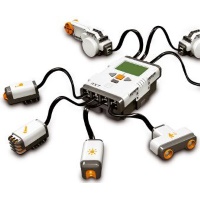
robotic kits, such as the Lego NXT Mindstorm, to teach students about
robotics and engineering principles.
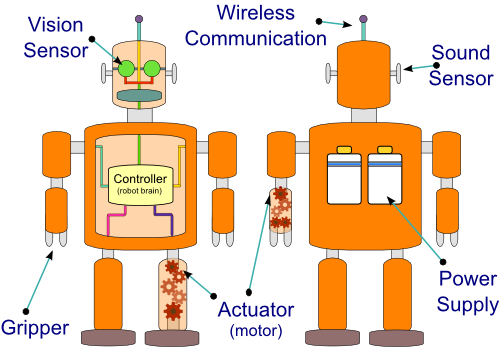
The
above diagram shows a robot modelled on a human, often referred to as a
humanoid. As you can see there are many parts that make up a robot,
each of which can be designed in different ways depending on the purpose
of the robot. The following sections will discuss these design
considerations.A downloadable guide to Robotics can be found here.
Robot
sensors can be compared to our eyes, ears and sense of touch. Without
sensors a robot has no way of perceiving its environment and can only
perform predetermined tasks. There are two main types of sensors, those
that sense the external world and those that sense the internal state of
the robot. The following is a list of popular robot sensors:
Often
in the form of a light dependant resistor (LDR), depending on the
intensity of the light, the resistance in the circuit changes. This can
be used to sense the direction of a light source.
Contact Sensor
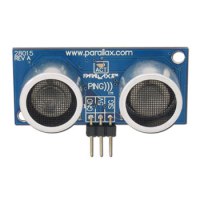
Proximity Sensor
Internal
Gyro – Used to keep the robot balanced
Accelerometer – For measuring movement
Temperature – For regulating the internal temperature of the robot
Tools and Attachments
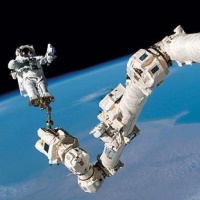
Space shuttle manipulator
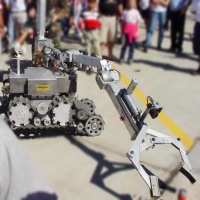
Robot gripper
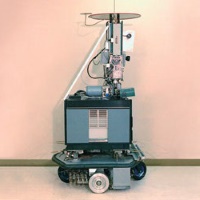
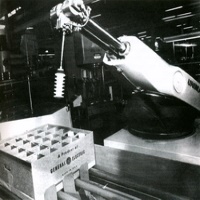
Early robot with packaging tool
In robotics the tool or attachment at the end of a robotic arm is called an end effector.
This end effector is used to interact with the environment, allowing
the robot to carry out its task. The selection of the tool/attachment is
dependent on the application of the robot; for example, robots used in
car manufacturing often have interchangeable tools allowing the robot to
complete various tasks, such as welding and paint spraying. Another
example, often found in mobile Robots, is that of a universal-gripper,
this type of attachment is much like a human hand and can be used to
perform a variety of tasks such as picking-up objects, opening doors or
pushing a switch.
There
are many different types of robots each designed for a specific task.
Generally robots can be divided into two categories, those that operate
in a fixed position and those that are mobile. Fixed robots are those
which are anchored to a point and use manipulators such as arms to
complete tasks. Many examples of fixed robots can be found in
manufacturing where they are used for a variety of purposes, such as
spray painting, welding, assembly and quality control. Mobile robots are
designed to move around their environment using one or more wheels,
legs or tracks, depending on the intended operating surface. The
following is a list of the types of robots currently in use:
Thanks for Great Article, for sharing content and such nice information for me. I hope you will share some more content about. Please keep sharing! spine specialist in lahore



Thanks for Great Article, for sharing content and such nice information for me. I hope you will share some more content about. Please keep sharing!
ReplyDeletespine specialist in lahore